


Powering the Next Generation of Data Centers
Optimized power performance for your AI workloads
Power Gateway is an intelligent power distribution platform built on a DC-native architecture with precision software controls.
Key Features

- Aligns to next-generation chip architectures, delivering 800 VDC directly to server racks
- Realizes up to 95% total power system efficiency by removing multiple AC-DC conversion stages
- Leverages proprietary event management and workload prioritization software controls for precise power distribution
- Dynamically toggles between on-site and utility power and responds to shifting grid conditions to maximize token generation efficiency

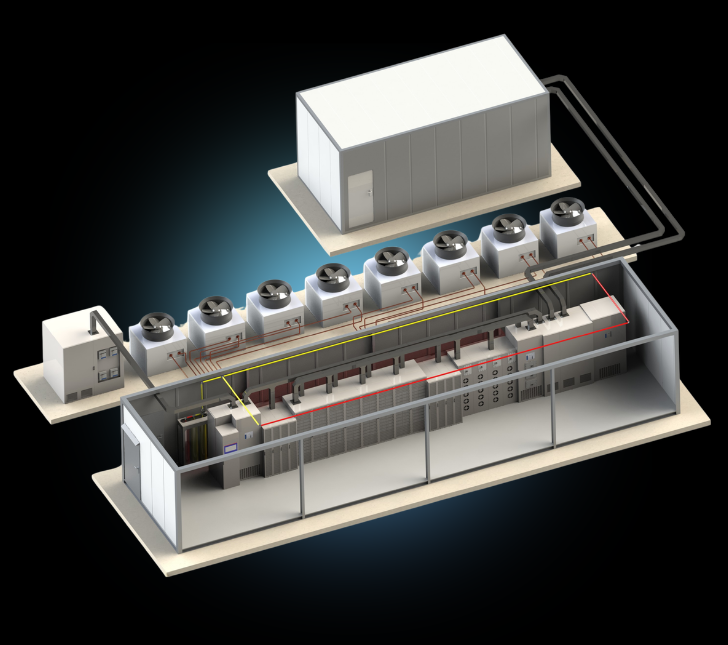
- Reduce CAPEX expenditure by $3 million per megawatt through Power Gateway’s all-in-one power system
- Simplify infrastructure builds and decrease site footprint for electrical systems by 60%
- Deploy new capacity faster using our modular, pre-commissioned solution supported by Claros’s dedicated field services team
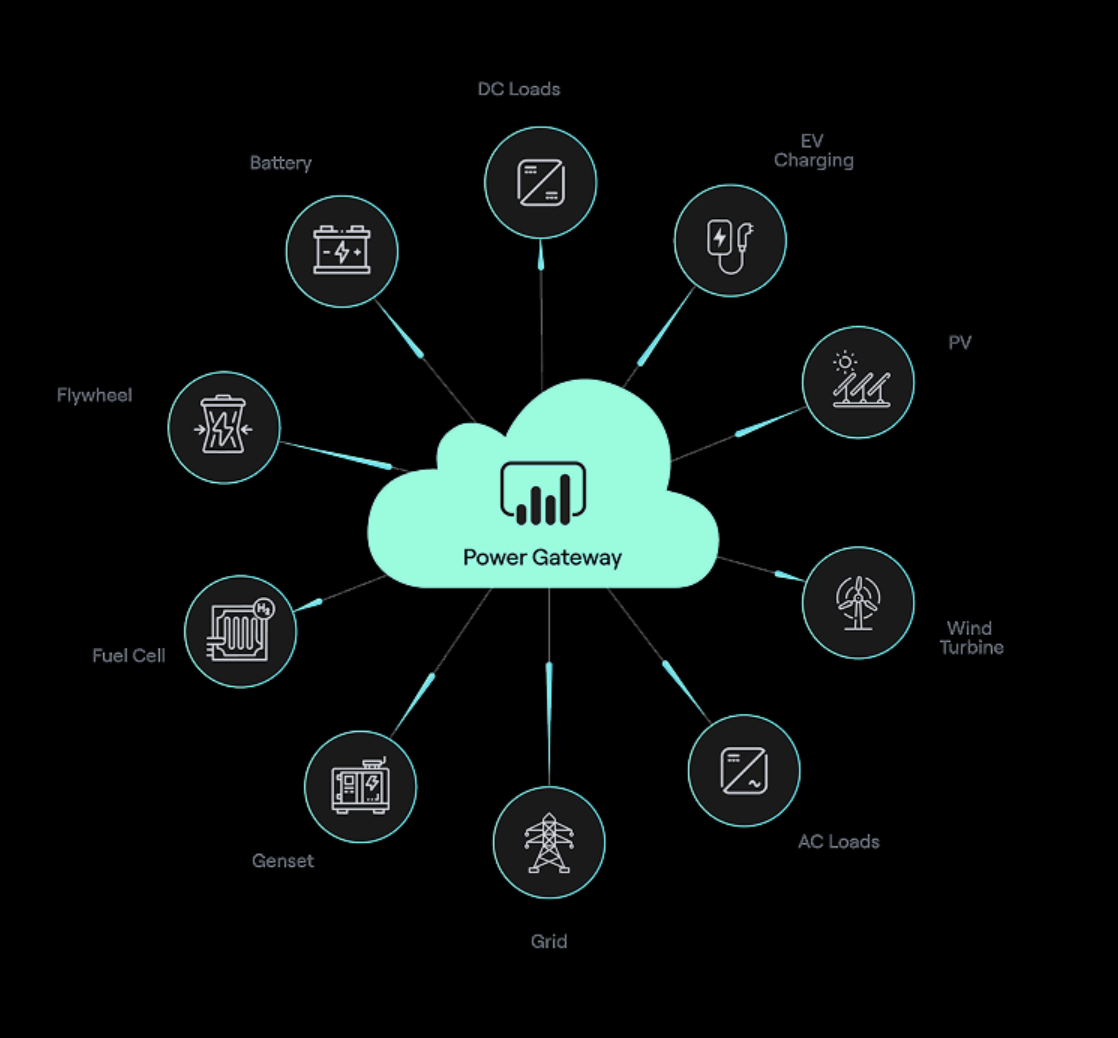
- Integrate seamlessly with any energy source including batteries, renewables, fuel cells, generators, and utility feeds
Partner with Claros
Explore Our
Other Products
Why are traditional power systems struggling with AI workload demands?
While alternating current (AC) power architectures have been used in data centers for decades, the use case for data centers is evolving, from data storage to cloud computing to now dynamic AI training and inference workloads. These AI workloads are enabled by GPUs, servers, and racks with significantly higher power requirements, and AC power systems are becoming increasingly inefficient and costly for these AI use cases.
For example, in standard AC power architectures, 10–15% of the incoming electricity can be lost during conversion steps and heat losses before reaching server racks. And, as rack power density increases, these AC power systems require larger infrastructure, larger cooling systems, and more floor space, which creates practical limits on expansion within the data center.
New high-voltage direct current (HVDC) power architectures, such as the 800 VDC architecture developed by Claros for Power Gateway, provide an alternative. By removing multiple conversion steps and eliminating unnecessary hardware, 800 VDC systems deliver power more efficiently to the server rack.
How can High-Voltage Direct Current power systems improve power efficiency for AI data centers?
High Voltage Direct Current (HVDC) power systems have significant advantages over legacy AC systems, including:
- Improved end-to-end efficiency, typically above 90%
- Reduced copper cabling by 50–70%
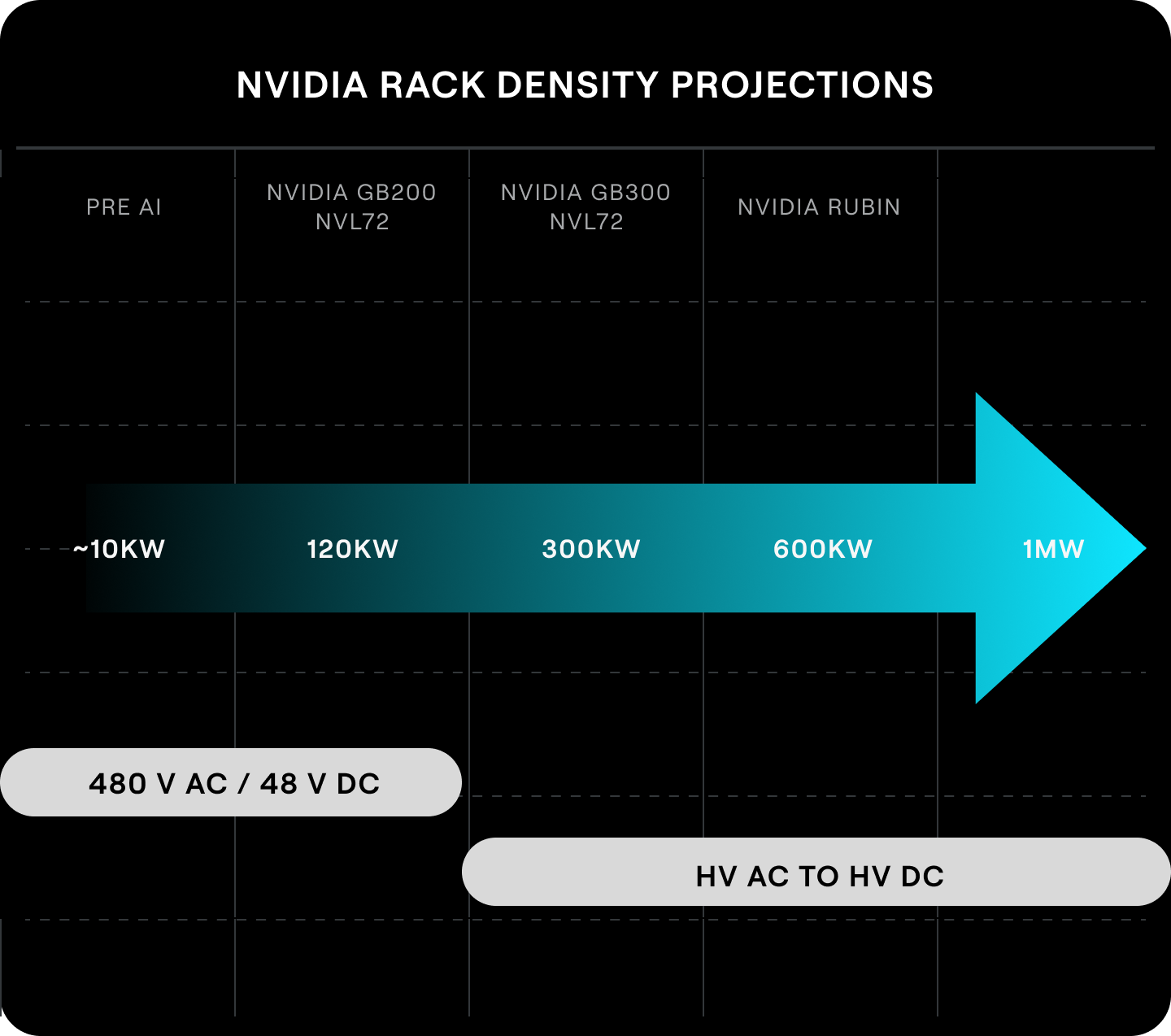
- Supporting rack densities beyond 200 kW
New HVDC systems, such as the Power Gateway from Claros, use simplified hardware with fewer conversion stages to reduce electrical losses between the grid (or other power sources) and server racks. This power architecture also improves reliability and reduces maintenance requirements through its streamlined design. In sum, data centers that utilize HVDC power systems, such as Power Gateway, can see total system efficiency improve from 78-85% to 94-95%.
Why are High Voltage Direct Current (HVDC) power systems important for scaling AI infrastructure?
Product roadmaps from leading chip manufacturers such as Nvidia indicate that power demands will continue to rise over the foreseeable future as AI workloads scale in scope and complexity. Therefore, the underlying power delivery systems in data centers must evolve to keep pace. Given that HVDC power systems like Power Gateway are more power efficient, they represent the natural evolution of data center power architecture. Not only that, but they improve cost efficiency as well – Claros’ Power Gateway can reduce CAPEX expenditure for data center power systems by $3M/MW, allowing data center developers to deploy new AI infrastructure more flexibly .
Also, the energy sources used by data centers are becoming more varied to reduce dependence on the electrical grid. HVDC systems like Power Gateway more easily connect via DC-DC coupling to renewable energy sources, batteries and microgrids that streamline the deployment of AI infrastructure.