

I started Claros with a simple conviction: The way we deliver power to data centers, and to the chips inside them, is broken. It’s a problem that’s worsening by the day, threatening to push power grids to their breaking points and halt the progress of AI.
As I write this, I’m surrounded by moving boxes that will soon be headed for a lab much larger than the one we currently occupy. This move follows our oversubscribed $30 million seed round co-led by General Catalyst and Red Cell Partners, with participation from new and existing investors like Systemiq Capital, Aero X Ventures, Trenches Capital, a leading power semiconductor provider, and others.
Turning Wasted Megawatts into Tokens
U.S. data centers now consume as much electricity as some countries, and global demand is set to double in four years. But there’s only so much power the grid can deliver, and data centers are already pushing up against that limit.
Since the ChatGPT boom, market demand has been met through more power generation, more grid capacity, more megawatts. In fact, U.S. utilities are on track to invest more than $1 trillion in the next two years to keep up. While these solutions succeed at getting more much-needed power into data centers, they overlook a stark reality: Legacy data center architecture wastes more than 30% of electricity before it ever reaches a processor or generates a single token. That’s because as power moves from the chip to the grid, it’s shed across five to seven conversion steps, where it’s emitted as heat and lost forever.
Capturing those wasted megawatts unlocks more value from every dollar spent on power and results in more tokens, more productivity, and lower inference costs. It could also help data centers overcome some of the backlash they have faced in recent months.
For instance, Virginia and Ohio are grappling with the rising electricity bills of their residents. Texas, concerned that data centers will wreck its grid, passed a law to curtail data center power use during peak demand. New York has introduced a bill that would impose a three-year moratorium on new data center construction permits to lessen the financial burden on households. More power generation will certainly quell demand concerns, but such regulatory hurdles–on site or otherwise–won’t disappear until data centers become better stewards of the electricity they use.
Rethinking Power Delivery
At Claros, we started at the chip to eliminate waste and solve the challenges confronting energy infrastructures. Traditional power delivery pushes electricity across inches of circuit board to reach the processor. Those inches matter. The paths operate at low voltage with high current and bleed energy, emitting heat the entire way. Our Integrated Voltage Regulator (IVR) cuts that distance from inches to millimeters, delivering power directly at the point of compute. We expect AI chips using our IVR to be roughly 15% more energy efficient. Multiply that across millions of chips in thousands of data centers, and the cumulative impact is enormous.
Next, we reimagined how electricity is sourced, stored, and delivered within data centers. This is where our second product, Power Gateway, comes in. Traditional data centers run on alternating current — requiring power to flow through multiple AC-to-DC conversions on its way to the rack, and each step introduces additional power wastage and equipment costs. Our DC-native power management platform reduces distribution and conversion losses by up to 50% while integrating seamlessly with on-site generation and storage.
Together, IVR and Power Gateway address how power reaches the chip and how it’s managed at the facility, all the way to the grid.
That’s how we improve efficiency from chip to grid.
What We’ve Built in 13 Months
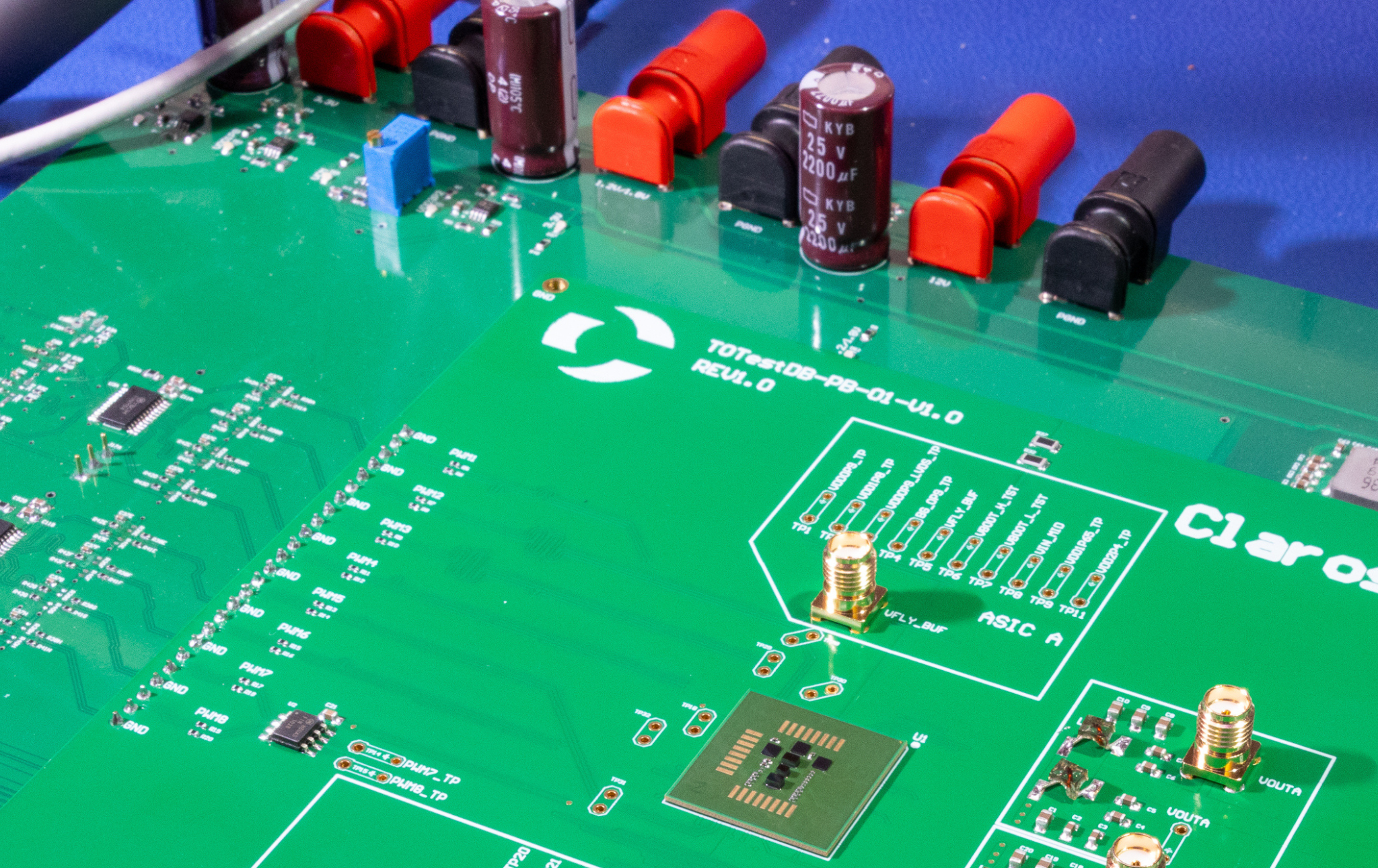
In the 13 months since our launch, we fabricated three IVR designs, one now on the test bench in our lab. We’ve also submitted a fourth IVR design based on customers’ requirements, completed initial Power Gateway hardware and software designs with a demo unit assembled, and added 26 people across Los Angeles and Northern Virginia.
Building a Better System
We believe the most impactful megawatt is the one that’s not wasted.
Every watt saved at the chip compounds across the entire data center. Less waste means less heat. Less heat means less cooling. Less cooling means less total draw. Less draw means less strain on the grid. And less strain means greater efficiency for data centers and peace of mind for the communities where they’re built.
AI adoption is not slowing down, and infrastructure must keep up. But keeping up doesn’t mean brute-forcing more power into an inherently wasteful system. It’s time to build a better one. That’s what we’re doing. From chip to grid, we’re making AI infrastructure more efficient, more resilient, and more sustainable.
I’m grateful to our investors for their belief in our mission and to our team for putting in the work that has allowed us to accomplish in 13 months what takes most years to achieve. We still have a lot of work ahead, but the path is clear, and we’re just getting started.